From Cornfields to Clinics: Journeys to Medicine
8 min read6 sections
In this article6
Hello! My name is Natalie, I’m currently a fourth year medical student at Medical College of Wisconsin, which is right outside of Milwaukee, WI. I was born and raised in the Midwest, and as such many of my earliest memories are of running through cornfields, driving combines and bothering the cows! My interest in medicine was initially founded in my personal experience as a patient. As a child, I dealt with chronic daily headaches, migraines and tension headaches. Struggling with chronic pain profoundly impacted my experience of the world from a young age, as well as my understanding of the impact of disease on patients and their family members.
However, I was also introduced to some of the incredible people who choose to pursue medicine. My care team was wonderful, multi-disciplinary, collaborative; though it was my pediatric neurologist who stood out most to me. In her office, I never felt defined by my health struggles and instead was defined by my interests, hobbies, and dreams. Her intentional attention to my identity, willingness to answer questions and individualize the approach to my care, to ultimately see me as a person instead of simply a patient, continues to inspire my own approach with patients today.
I was very fortunate to later discover the trigger for my migraines and headaches (gluten, who knew?), but the impact they left established my intent to spend my life doing what my neurologist had done for me: everything possible to help people heal.
Premed Years
With my interest in medicine, both the science and the humanity of it, firmly established, I obtained a degree in Biology with minors in Neuroscience and Spanish Studies from the University of Minnesota – Twin Cities. While I certainly pursued many of the classic premed extracurriculars during undergrad (research, hospital volunteering, etc: Learn the Top 6 Extracurriculars here), my college years were most influenced by my experience as a D1, Big Ten, Collegiate Rower. I had never rowed prior to coming to college, I’d actually grown up a very mediocre competitive swimmer. However, I had gotten to undergrad and found myself looking for a few things: a challenge, an outlet, a community, and a way to pay my tuition. Rowing was all of these things and simultaneously so much more. I credit my time spent as a college athlete with many of the personal characteristics I’m most proud of, including time management and communication abilities, dedication and consistency, teamwork and leadership skills, and most of all: grit. Rowing made me gritty. Those 5AM wake-ups for practice, ice-cold November mornings on the Mississippi, sprinting to a lab session between workouts, taking exams on the road while traveling to competitions, it all taught me to view the world through a lens of resilience and long-term, group-serving goals. Rowing ultimately established my understanding of three things that continue to shape my interactions with the world: people, hard work, and the unifying nature of a common goal.
Applying to Medical School
I first applied to medical school in 2019, between my junior and senior year of college, with the intent to go straight through to medical school. That first cycle ultimately wasn’t successful. I didn’t interview anywhere, and felt like a complete failure. However, my goals and intentions for my life had not changed, nor had my decision to accomplish them by becoming a physician. As such, I dove head first into some very self-critical reflection, looked at my application as objectively as possible, and chose to address the gaps I saw; the largest being my lack of true clinical experience and understanding of what it means to work in healthcare (check out the AAMC core competencies here). This led to what has probably been the experience that most heavily influenced my perspective of healthcare and its delivery: I worked as a medical scribe in a Minneapolis emergency department from April 2020 – May 2021. During a global pandemic, George Floyd’s murder and resulting watershed Black Lives Matter movement, as well as being hours away from home, it was both a location and a period of life that again required significant reflection. I re-applied to medical school during the 2020 cycle, and when I am asked what the difference was between my cycles it was this: a serious maturity shift in my understanding of healthcare deficits/realities and a wealth of direct experience to talk about them. I knew I had appropriately addressed my gaps when I was then accepted to medical school in early October of that year.
Experience, Personal Growth, and Challenges
I have absolutely loved being a medical student. I certainly will not say that it hasn’t been difficult, that there haven’t been growing pains and challenges along the way, but it has undoubtedly been the most gratifying experience I have had in life so far. My didactic years (time spent in lecture instead of with patients) were more of a challenge for me. While what we were learning was interesting, I felt removed from my innate motivation for pursuing the field: people and getting to care for them. As such, I pursued additional clinical time and experience. I shadowed regularly, went into the hospital/clinic during winter and summer breaks, and really just spent way more than the required time in a clinical setting. This was truly the best decision for my learning. It kept me grounded in my motivation and also allowed me to directly apply the things I was learning to patient care and care delivery. It connected me to mentors and clinicians who I then pursued projects with or who I admire and whose bedside manner I now strive to emulate. During didactic years I was thankfully very intentional about my extracurricular involvement as well. I pursued roles, projects, initiatives that spoke to my own interests or that would help me develop a particular skill set. This intention, decision to do the things I’m passionate about instead of simply checking boxes, was unknowingly fundamental to constructing my residency applications. I thought I was just being stubborn and particular, but oh man am I thankful I was!
Transitioning to my clinical years subsequently felt like a gift. After two years of mind-numbing pathophysiology, unit exams and board exams, getting to actually work (of course with oodles of supervision) was such a welcome change. Clerkship years present their own challenges, though. You go from complete control of how you structure your time/studying during didactic years to absolutely no control over how your weeks/months/years are structured during clinical rotations. You still have exams and extracurricular responsibilities, but now much less time (usually as much as you can muster after a 12 hour work day). But you get to work with patients, a responsibility and privilege that cannot be overstated; you bear witness to the trials and tribulations of humanity, get to deliver babies one day and hold people’s hands as they pass another, laugh, cry, curse and exclaim, you get to care for people in their most vulnerable moments of both joy and grief. It’s the most difficult and wonderful thing in the world (Physician and writer Atul Gawande has written incredible books and articles around these themes. Check out one of his excerpts here from his book The Checklist Manifesto).
Mentorship and Support
While I have not had a particular mentor throughout medical school, I have sought out mentorship in bits and pieces. I’ve worked with incredible clinicians in all areas of medicine and been lucky to have wonderful examples of the best practitioners in their field. While formal mentorship programs are lovely, and I myself am involved in multiple (I’m a ‘Big Sib’, a ‘Near-peer mentor’, and a mentor at MCW’s 1st generation in medicine group), many of my most rewarding relationships have formed organically with individuals who I share common interests with, work on projects with, and seek out for expertise and advice.
Future Goals
I am currently in the process of interviewing for combined Internal Medicine/Pediatrics residency, something I am particularly excited for! As someone who wants to be able to care for anyone in the hospital/clinic, I have sought out what is arguably the broadest but still most comprehensive specialty out there. While I won’t be able to deliver any babies, I’ll potentially be able to be their physician from the moment they’re born to the moment they leave this world. I could work in the intensive care units one week then as a PCP the next, pursue a sub-specialty fellowship while also being a generalist (I’m considering both adult heme-onc AND newborn nursery in my future practice, because why not?) I’m planning to cherry-pick my career experiences as much as possible; it’s worked very well for me so far, and so I don’t plan on stopping being particular with my vision of what I want life to look like! (Help find your niche of future practice here with the Residency Explorer Tool)
Additionally, throughout my time in medical school I have fallen in love with medical education, with creating visions and movements for what medicine can and should look like for the future. As such, I plan to be a clinician educator and continue working with learners. My scholarly interests are varied, though heavily skewed towards oncology for both personal and professional reasons, and I’ll likely pursue some form of research whether those are clinical trials or quality improvement projects.
I have both worked incredibly hard and been very lucky to have accomplished significant things during medical school. While I don’t know where I’ll go for residency, I don’t have a bad apple in the bunch of programs I’ve interviewed at, and more so I trust in my ability to thrive wherever I end up!
Advice for Aspiring Medical Students
My advice for aspiring medical students is deceptively simple: do what you love. The classic saying of “do what you love and you won’t work a day of your life” is flawed, burn-out is real and pursuing goals is always hard work, but I think staying connected to your ‘why’ for medicine, keeping grounded in your motivations and interests goes an incredibly long way. Even now, 3.5 years into medical school, I still occasionally re-read my med school personal statement. It’s a reminder of the incredible possibility that comes with this field and how much I’ve grown as both a person and future practitioner. Getting to pursue the things I’m passionate about (including patient care) doesn’t come without hard work and difficulties, but it’s also incredibly rewarding, an absolute privilege, and I wouldn’t have it any other way.
Check out MotivateMD’s other blog posts for further advice, insight and resources here.
Written By: Natalie S., MD
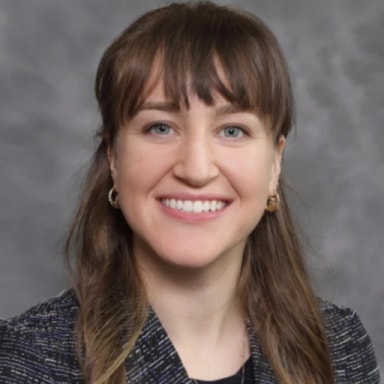
Natalie S., MD
Advisor · Editor · Interview Coach
Combined Internal Medicine-Pediatrics · University of Michigan
Medical College of Wisconsin
Hello! My name is Natalie, I'm a combined Internal Medicine-Pediatrics resident at University of Michigan. I worked for MotivateMD throughout medical school and have had the privilege of helping applicants showcase the very best of themselves through their writing and interview skills. I have a love for medical education, teaching, and quality improvement and thoroughly enjoy helping to guide people through the complexities of our healthcare system (including applying for it!)
- Let's stay in touch. Get the latest blog post in your inbox.
 Written By: NataliePublished: