Non-traditional Path To Medicine
7 min read
My journey to medicine was non-traditional. Growing up, I never wanted to be a doctor; in fact I wanted to be an artist. In high school I enjoyed science so in college I was a biology major. There, I explored molecular biology research and pre-med but I didn’t feel a passion for either. After graduation I volunteered as a research assistant (RA) in an epidemiology lab. I was hooked, specifically on health disparities analysis. I took an administrative job as a clinical trial coordinator for a year while I applied to research assistant (RA) jobs in public health. I obtained a part-time RA position in a spatial epidemiology lab. We studied neighborhood factors and health disparities among sexual, gender, racial, and ethnic minorities. I also did a part-time internship at my local department of health where I helped analyze the results of citywide disease surveillance. Writing literature reviews, organizing data, helping edit grants, performing qualitative analysis of focus groups – I loved it all. I had found my passion. I applied to master’s programs in epidemiology to get more training. But I also wanted more! I wanted to be a principal investigator, to work with study populations more directly, and to observe the downstream impacts of our research.
At the department of health I was inspired by my boss, a public health physician, who advised me to go the route of MD instead of PhD. She explained that through this path I would have more options, financial stability, and the ability to affect health at both the patient and population level. I still was not sure about the practice of medicine itself–my passion was public health–but I had seen lots of physicians in the job positions I was interested in and wanted to have those clinical options. So, I decided to study for the MCAT on my own the last few months before starting grad school. A month into my master’s I got great news. I could apply to medical school the next summer!
Grad school was thrilling and I was lucky to be at a large research institution where exciting discussions and events were always happening. I loved learning epidemiology analysis, study design, research methods, surveillance, and more. I continued learning about and studying spatial and social epidemiology. My worldview and career aspirations became focused on social determinants of not just health, but life, as well as their history, current policies, and possibilities of more equitable conditions for people. I focused on neighborhood-level disadvantages affecting Black & African American health. I got to design my own master’s research project and chose to examine 1930s segregation and modern mortgage discrimination. I analyzed the impact of these factors on STI incidence in one city. Doing my own research was not only exciting but more slow-going than I had realized and I wanted to do more individual-facing health work. So I looked forward to some other career possibilities as a public health MD.
I wanted to attend med school back home in New York City or in a nearby city in the Northeast. I applied to 27 schools in 2019 at the end of my first year of grad school. Pre-writing my secondaries helped me stay on top of my course load, but managing interviews with my classes and TA duties was difficult at times and I actually got my first ever C because of traveling to interviews and falling behind on assignments. I was fortunate to receive many interviews including one at my top choice school, and was even more fortunate to be accepted there. The pandemic hit in my last semester of grad school though, so I deferred my admission by a year to work on COVID research and do my part as an epidemiologist.
Like many before me, I was caught off-guard by the difficulty of medical school. Drinking water from a fire hose? I was drowning in that water! I actually failed my first semester exams. A close family member died two weeks into med school and I experienced some other personal losses as well. This resulted in a very stressful first year where I constantly felt at risk of failing out of school. I had to work harder that first year than I ever have in school in my life: 7 days a week in the library up to 10 hours a day. I am not a strong test-taker and it takes me a very long time to learn the volume of information we are given in med school. But the advice of my upperclassmen proved true and I will give the same advice to you: the learning does get easier. Your brain adjusts to the workload and you develop skills to get through. However, med school ebbs and flows. I’ve had many months of easier workloads interspersed between many months of extremely difficult workloads. Some classes and rotations are harder than others, and board exams are the hardest part! I had to extend my schedule to have more study time for STEP 1 and STEP 2, our board exams. Surprisingly, I found that about one third of my classmates also had to take extra time.
Everyone struggles in med school. I know students battling devastating personal loss, medical issues, family responsibilities, and more. This is part of the reason that admissions committees screen for resiliency. I have been disappointed by the weakness of professorial mentorship at my school but I have been so grateful for the mentorship of my upperclassmen friends. And I have paid it forward by developing a mentorship network for med students who failed classes like myself. This is my favorite thing about my school: the incredibly strong student community that has helped support each other. While I never could afford much time for extracurriculars in preclinical years, I was able to do more in my 3rd and now 4th years. In med school I am/have been involved in this academic mentorship club, some small research projects, curriculum changes, our free clinic, a community health group, an art class, and had my artwork published at my school and in outside publications. At the end of MS3 I decided upon family medicine (FM) and have been able to volunteer with some policy actions at the state level here in NY.
My career goals have not changed too much–I still want to be a public health physician–but I now want to work part time clinically because I love patient care so much. I have some interests in specialization within FM such as OB/GYN and working at a women’s health clinic. I’m hoping to work in a variety of public health settings including academia, government level, community organizations, and more. Clinically, I’d like to work at a federally qualified health center (serving patients regardless of their ability to pay) and do work in preventative medicine.
Advice for Aspiring Medical Students
I have endless advice for aspiring medical students but will narrow it down to this:
- Do not push yourself to apply before you are ready. It’s ok to spend time after college to save, prepare, and study to apply to medical school.
- Admissions committees like applicants with more life and professional experience and most importantly, you will be better prepared to succeed in med school.
- It’s ok to have doubts about this career path. I did and still do!
- Do not give up with that bad grade, MCAT score, rejection, etc. Did you know that 40% of MCAT test-takers are taking the test for another time? No matter how weak you feel like your application may be, there is someone else with a weaker application who has succeeded.
- You need to be willing to lean on your support system. This is a very difficult, grueling process and medical school will be a significant challenge.
- It’s difficult as a pre-med to stay focused on your goal every day without stress. Instead, focus on one day, week, or month at a time. That’s what I do!
- Minimize sources of stress–especially outside opinions or pressure from people who may be well-intentioned but not know what they are talking about (*ahem, parents!*)
- Surround yourself with a community of peers, but a supportive one. You don’t have to listen to *that* kid who is always bragging about studying, or comparing notes on test scores and volunteer hours.
- Just because you are struggling does not mean you will not succeed!
Written By: Sophia Z.
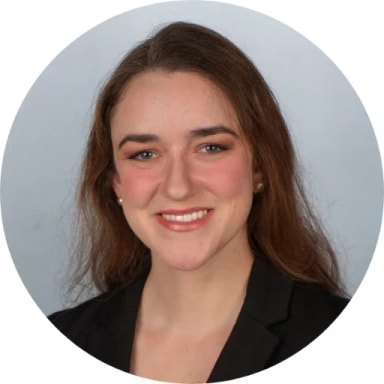
Sophia Z.
Editor
Family Medicine · Family Health Centers of San Diego
State University of New York Downstate Medical Center College of Medicine
- Let's stay in touch. Get the latest blog post in your inbox.
 Written By: SophiaPublished: