Difference Between MD and DO
7 min read11 sections
In this article11
Commonly asked questions about allopathic and osteopathic medicine
Part 1: Introduction
When one decides to become a physician, there are two routes to choose from. Route one is a Doctor of Medicine (MD) and the other route is a Doctor of Osteopathic Medicine (DO). Continue reading if you'd like to know the similarities and the difference between MD and DO.
The MD portion of this blog post is written by Deena, a fourth year MD student in Indiana. The DO portion of this post is written by Emma, a fourth year DO student in New Mexico.
Part 2: MD Breakdown
What is an MD?
Generally speaking, an MD is a "Professional Doctorate" or a "Doctor of Medicine." MDs are also known as "Allopathic Physicians." An MD physician attended a medical school accredited by the Liaison Committee on Medical Education (LCME).
What does "allopathic" mean, and what is allopathic medicine?
The word "allopathic" comes from the Greek "allos," meaning "opposite," and "pathos," meaning "to suffer." So then, allopathic medicine can be thought of as providing treatment to conditions by remedies that produce effects opposite to the symptoms. Biomedicine, conventional medicine, mainstream medicine, Western medicine, and orthodox medicine are all terms used to describe allopathic medicine.
Allopathic medicine serves as the stimulus for public health efforts and evidence-based health system resources. This method encompasses everything from disease diagnosis to treatment choices information, enabling physicians to give their patients appropriate medical advice and health information.
What is evidence-based medicine (EBM)?
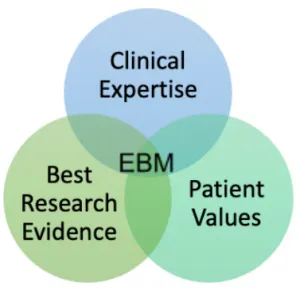
EBM is defined as the conscientious, explicit, and judicious use of current best evidence in making decisions about the care of individual patients.
In other words, EBM combines the best available research evidence (found in the health sciences literature), clinical expertise (what the health care provider knows), and patient values (what the patient wishes and believes) to develop a plan of action toward patient care.
To help learners understand the process of EBM, Dr. Robert Hayward developed a system known as the 5As of the health information cycle. The 5As include ask, acquire, appraise, apply, and analyze.
- Ask: develop a searchable question. This is usually done by the PICO method.
- P: Population
- I: Intervention
- C: Control
- O: Outcomes
Example: Among adult stroke survivors with depression treated with selective serotonin reuptake inhibitors (SSRIs), what is the risk of recurrent strokes versus in severity of depressive symptoms. (control = no recurrent strokes)
- Acquire: use EBM resources to locate a high-quality information source to answer the question
- Appraise: use critical appraisal to ensure that the information being used is high quality, authoritative, and relevant to the patient
- Apply: combine the best research evidence, clinical expertise, and patient values to determine the course of action and apply this to the patient
- Analyze: reflect on the course of action taken and seek ways to improve
Listen below to Dr. Robert Hayward explain the 5As .
What disciplines of medicine do most MDs practice?
According to the AMA 2019 figures, less than 30% of MDs practice in primary care specialties, whereas nearly 70% specialize.
US primary care physicians (PCPs) practice general internal medicine, family medicine, or pediatrics. PCPs are educated to serve as the patient's initial point of contact with the healthcare system or as their "gatekeeper." PCPs are physicians who:
- conduct standard and routine health examinations (i.e., blood pressure, cholesterol, blood sugar level checks)
- manage/treat minor illnesses
- answer health inquiries
- maintain a patient's medical record
- refers to a specialist, when necessary
Specialty physicians have received training in a particular field of medicine; this enables them to manage complicated health issues that PCPs may be unable to treat. The American Board of Medical Specialties lists specialties and subspecialties; it includes*:
- Specialty: Anesthesiology
- Subspecialities:
- Critical Care Medicine
- Pain Medicine
- Sleep Medicine
- Subspecialities:
- Specialty: Dermatology
- Subspecialities:
- Dermatopathology
- Pediatric Dermatology
- Subspecialities:
- Specialty: Emergency Medicine
- Subspecialities:
- Medical Toxicology
- Pain Medicine
- Sports Medicine
- Pediatric Emergency Medicine
- Undersea and Hyperbaric Medicine
- Subspecialities:
- Specialty: Otolaryngology-Head & Neck Surgery
- Subspecialities:
- Neurotology
- Plastic Surgery within the Head & Neck
- Subspecialities:
- Specialty: Radiology
- Subspecialities:
- Diagnostic Radiology
- Interventional Radiology and Diagnostic Radiology
- Radiation Oncology
- Subspecialities:
- Specialty: Psychiatry
- Subspecialities:
- Addiction Psychiatry
- Forensic Psychiatry
- Geriatric Psychiatry
- Subspecialities:
- and many more
*This is not a comprehensive list, to see the complete list please visit the American Board of Medical Specialties website.
Common Question:
Is it harder to get into an MD program vs. a DO program?
It's challenging to determine which medical program is more difficult to enter. Acceptance rates are generally the first thing candidates look at when determining which medical program is harder to get into versus the other.
- In the 2018-19 application cycle, 8,442 applicants were accepted to osteopathic (DO) medical schools out of the 185,710 who applied, for an overall acceptance rate of 4.55%, according to the American Association of Colleges of Osteopathic Medicine (AACOM).
- In the same application cycle, 21,622 applicants were accepted to allopathic (MD) medical schools out of the 52,777 who applied, for an overall acceptance rate of 41%, according to the Association of American Medical Colleges.
I believe it’s crucial to understand the history behind those numbers.
Allopathic Medical Schools
| Osteopathic Medical Schools
|
So, which program do I think applicants will have a tougher time getting accepted? Osteopathic (DO) medical schools are technically the correct answer according to acceptance rates. That being said, DO students on average have slightly lower GPA and MCAT scores compared to MD students. All in all, both programs are difficult to matriculate into. It’s a better idea to figure out what medical program matches your principles and beliefs instead of checking the stats.
Part 3: All about DO
What is a DO?
First, let me preface my writing by saying that I am currently a D.O. student myself and my goal is to shed a little bit of light on osteopathic medicine as well as dispel any misconceptions surrounding the field.
Osteopathic medical students (DO) are required to complete a nearly identical curriculum to allopathic students (MD) though also learn principles of osteopathic medicine and osteopathic manipulative medicine (OMM). Through OMM, students learn hands-on palpation skills early in their education that may enhance the acquisition of knowledge in other topics such as clinical skills and anatomy.
What is OMM?
Essentially OMM is a hands-on technique that allows osteopathic students and physicians to affect the reciprocal relationship between the structure and function of the body. For instance, if a patient has a history of chronic shoulder pain due to playing competitive baseball, an osteopathic physician might use a technique known as Spencer’s technique to address various limitations in the range of motion of the shoulder. Once this and lifestyle modifications are addressed, the goal is to optimize the function of the body by impacting the structure itself.
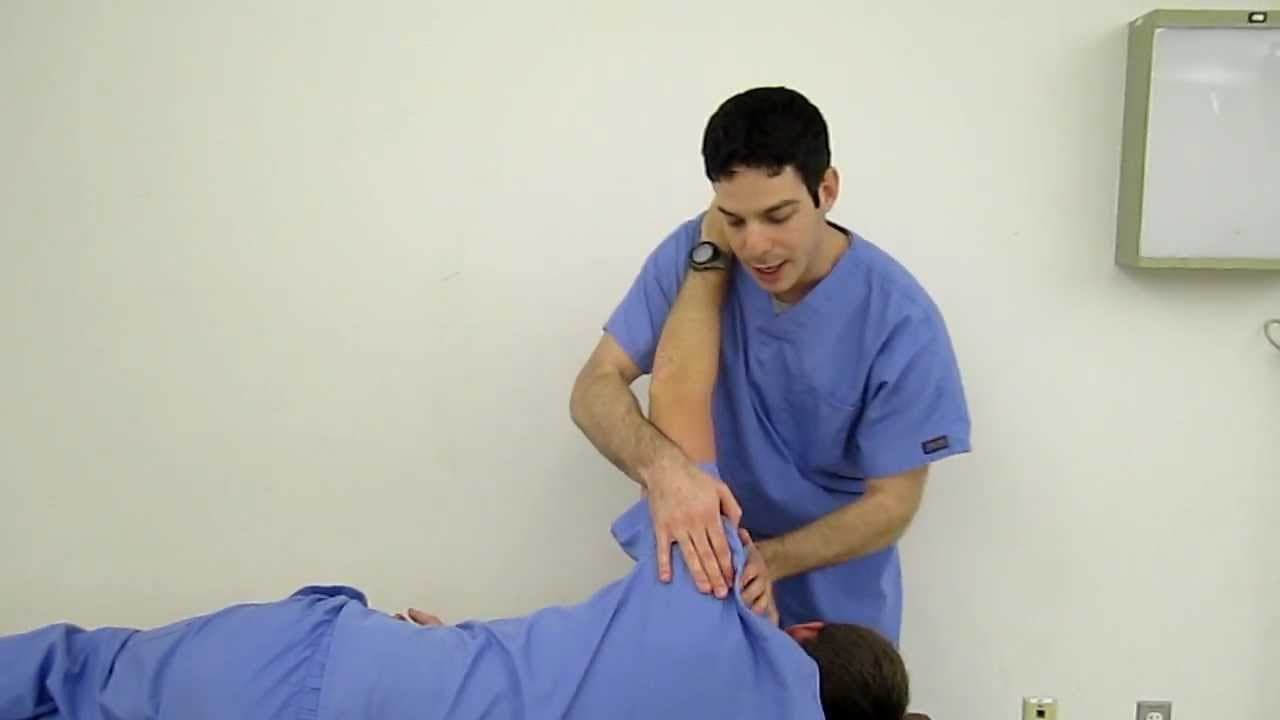
Overall, osteopathic medicine has a focus on treating the body as a unit: mind, body, and spirit, with the belief that the various systems are connected and treating them as such will inadvertently optimize function. This perspective often encompasses preventative medicine as well as an emphasis on the body’s innate ability to heal and self-regulate.
To learn more about osteopathic medicine and the osteopathic tenets, visit here.
Frequently Asked Questions
What specialties can I go into as a D.O.?
There is often a misconception that if you attend an osteopathic medical school that you must pursue primary care. While primary care is a popular specialty among many osteopathic students, this is not the only path. According to NRMP Data from 2018, osteopathic seniors matched in a multitude of specialties:
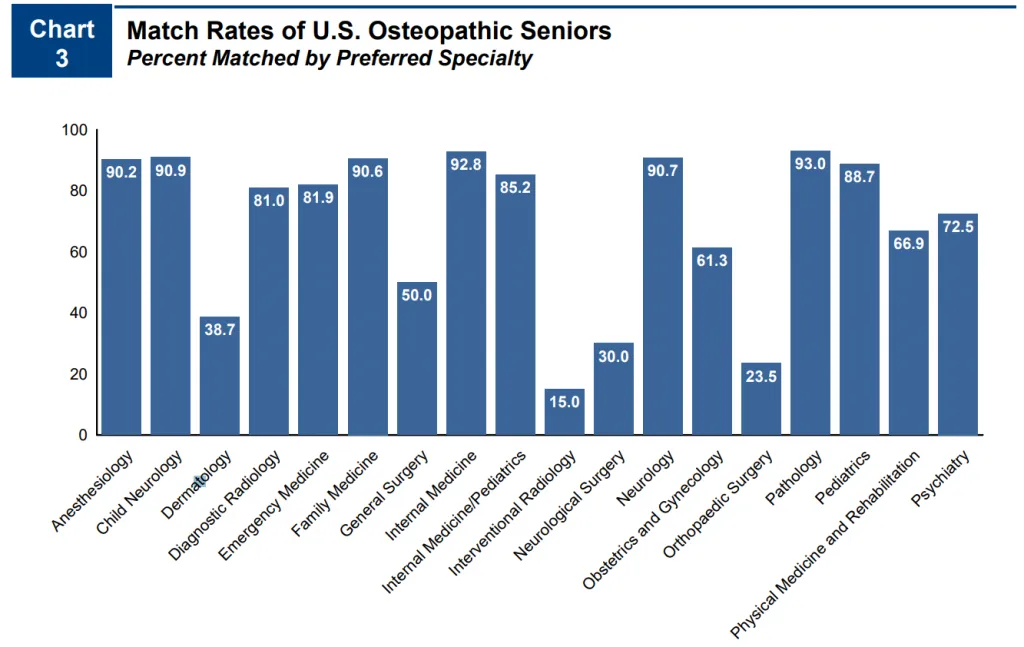
Therefore, the short answer is like allopathic medicine, you are able to go into any specialty, depending ultimately on your performance throughout medical school.
Do I need to shadow a D.O.?
While it is not a requirement for every school, this is something of which I personally recommend for each student applying to osteopathic schools. Shadowing a D.O. will give you insight into the world of osteopathic medicine as well as enhance your understanding and perhaps reaffirm your interest in osteopathic medicine.
Often, secondary applications for osteopathic schools will ask about your interest in osteopathic medicine and/or your experience shadowing osteopathic physicians. To that end, having multiple immersive experiences in the world of osteopathic medicine will only serve to prepare you for your future medical education.
Should I get a D.O. to write a letter of recommendation on my behalf?
Many schools do have a requirement to have at least one letter from an osteopathic physician while others require M.D. or D.O. letters. That being said, having shadowing experiences within osteopathic medicine as well as knowing an osteopathic physician of whom can advocate for your candidacy for medical school would certainly not hurt.
All in all, my answer is an overwhelming YES.
Should my personal statement be different from my allopathic application?
Absolutely it should! In your personal statement you should make connections to osteopathic medicine and why it interests you. While your personal statement may have similar content, it is essential to tailor your personal statement for the field of which you are applying: osteopathic medicine. If schools get the impression that you took the same personal statement from AMCAS and submitted it to AACOMAS, they may presume you are not as interested in osteopathic medicine. Therefore, make a conscious effort to really tailor your essay to demonstrate your interest.
Are you Struggling with your personal statement?
Watch a free 30 minute workshop to learn how to overcome writer's block and finish writing your personal statement.
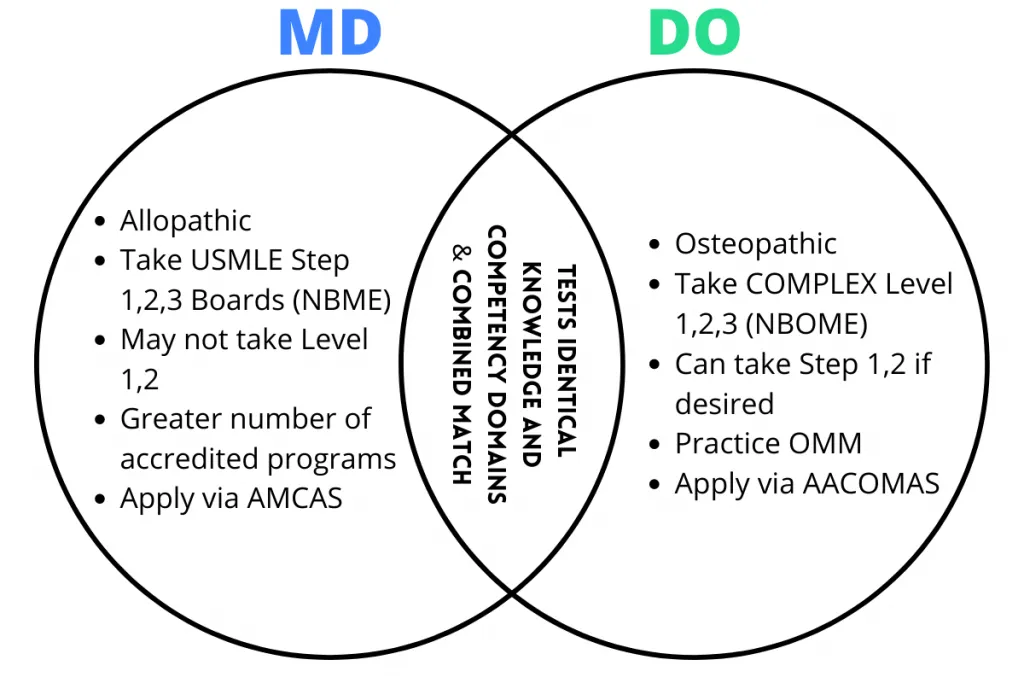
Part 4: Similarities and Differences Between M.D. and D.O.
- Let's stay in touch. Get the latest blog post in your inbox.