
Virtual Rounds Session 8: Orbital Cellulitis (Premed Shadowing)
4 min read7 sections
In this article7
Skip To:
Throughout each premed virtual shadowing session, you will actively participate by answering and asking questions about the week’s proposed case. Like an in-person shadowing experience, we strive to stimulate students intellectually and ultimately reaffirm their interest in medicine.
Introduction – Orbital Cellulitis
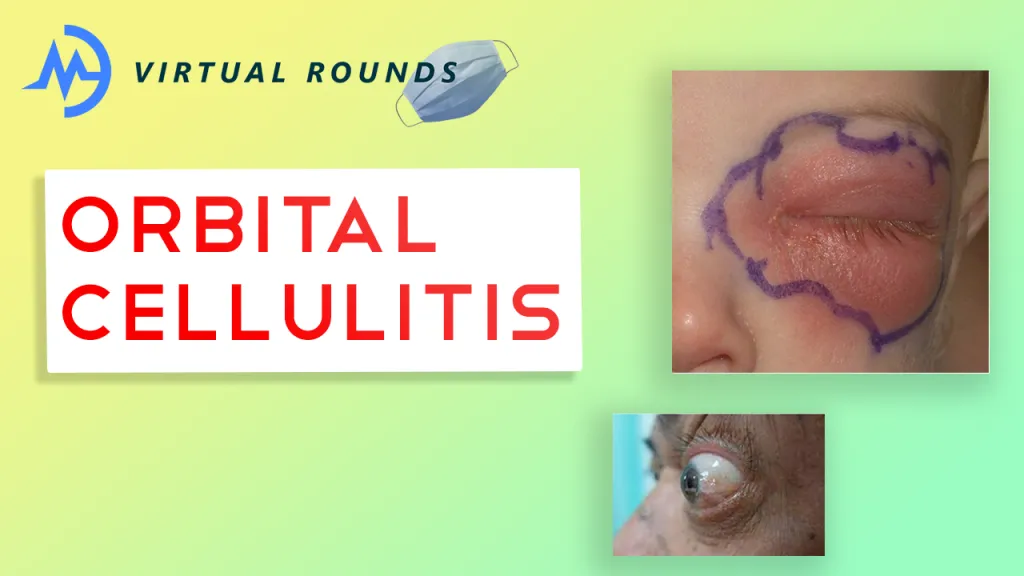
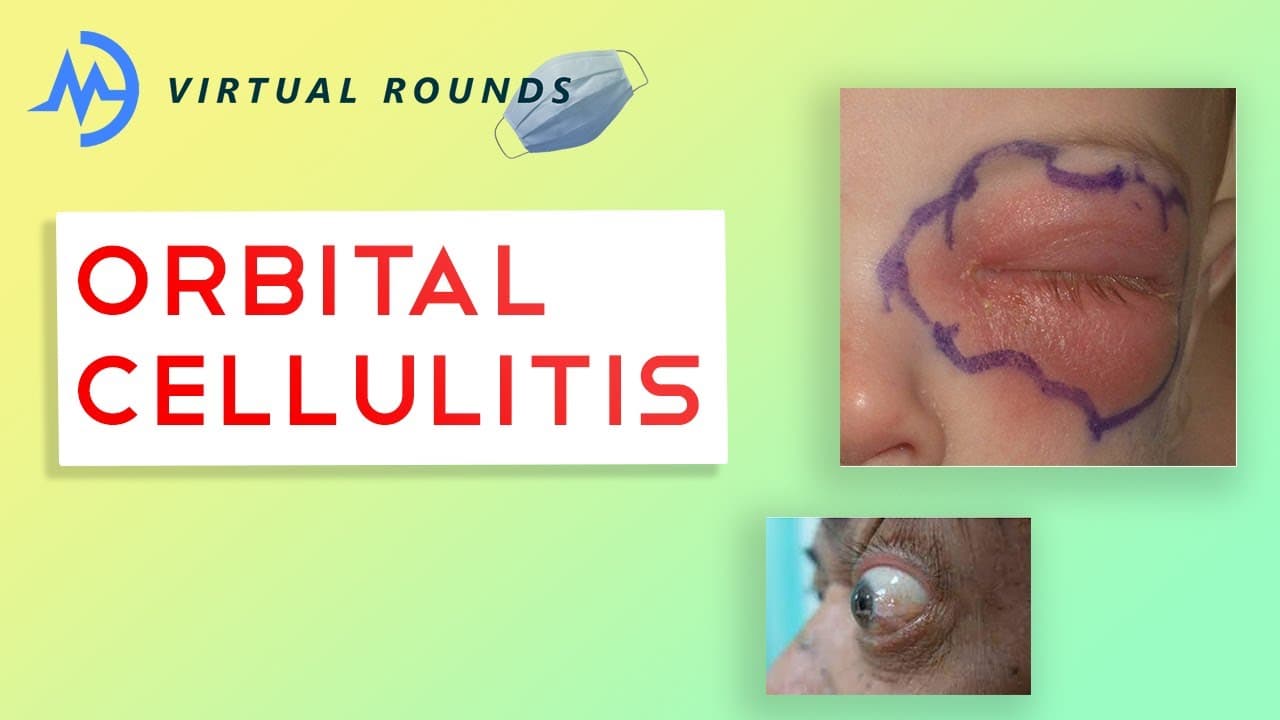
Here’s another great case in emergency medicine and ophthalmology. Orbital cellulitis is a condition which can develop from trauma to the eye creating a niche for infection, a bug bite or even a stye. Due to the fact that the infection is WITHIN the orbit itself (and not just the soft tissue around the eye (AKA periorbital cellulitis)), the patient must be treated quickly to prevent severe complications such as brain abscess or blindness. Follow along with the case below to learn how to recognize, diagnose, and treat a patient with orbital cellulitis.
Medical Jargon
(revisit this section as you go through the case and physical exam so you understand the terminology).
Periorbital swelling: skin around the eye is swollen
Erythema: Redness
Proptosis: Protrusion of the eye from its socket
PERRL: Pupils equal round and reactive to light
Conjunctiva: Whites of your eyes and lining of inner eyelids
Visual acuity: 20/20 is normal (20/40 means a patient with normal acuity can see the object from 40 feet, while the patient with abnormal visual acuity must be 20 feet to see it)
EOM (extraocular movements) appears full with symmetric corneal light reflex: Extraocular movements (eye movements), using a light to check if the eyes are centered normally
Nystagmus: Involuntary jerking eye movements
Diplopia: Double vision (seeing two of something)
Case Highlights
A 39-year-old male presents to the emergency department with a chief complaint of right-sided headache. He thinks that he first noticed the pain 3 days ago, but notes that he is a security guard and was punched in the right face 2 weeks ago (all the bruising around his right eye has since resolved). He describes the pain as a dull ache around his right eye. He denies any throbbing sensation, photophobia (light makes pain worse), phonophobia (sounds make pain worse). However, he does admit to diplopia (double vision) and sharp pain with eye movements when looking left, right, and down. He says the double vision stops when he covers one eye. He has not taken anything to treat his symptoms and says nothing makes his pain better.
Physical Exam
No acute distress. He had mild-moderate right-sided periorbital swelling and erythema. No discharge or proptosis. Eyes had PERRL. Conjunctiva are clear bilaterally. Visual acuity: 20/40 without correction at 14 inches. Full visual fields. EOMs appear full with symmetric corneal light reflex and no nystagmus. Patient endorses diplopia and ocular pain with left, right and downward gaze. Ocular pressure normal with tonopen.
Pathology
In order to best treat your future patients, you must think carefully about your assessment (differential diagnosis) and be able to rule out the other conditions that may develop in a similar fashion. For our patient, we want to consider the following:
- Postseptal (Orbital) Cellulitis
- Inflammation of the tissues behind the orbital septum/palpebral fascia and within the eye itself. This could include the eye muscles, globe of the eye, or optic nerve. It can be caused by pathogens getting into the eye through trauma (like getting punched in the face), insect bites, contiguous spread of an infection from the sinuses, spread of an infection through the blood. Be suspicious if you find or see…Swelling, warmth, redness of the eyelid, fever, changes in vision and pain with eye movements. The patient will have abnormal visual acuity, possibly proptosis and swelling of the conjunctiva. Consider getting a complete blood count to evaluate for the presence of abnormally high white blood cell count. The patient must be admitted to the hospital for IV antibiotics and evaluation by ophthalmology. Patients with changes in their vision (ex. 20/40 visual acuity and/or diplopia) must be admitted to the hospital for further evaluation.
- Preseptal (Periorbital) Cellulitis
- This condition presents similarly to orbital cellulitis. The patient will have swelling of the soft tissues around their eye, difficulty opening their eye, as well as surrounding pain to palpation and erythema of the overlying tissues. However, what differentiates this condition from orbital cellulitis is the fact that the patient’s infection is only AROUND the eye and not within it.
- Cavernous Sinus Thrombosis
- This is a scary condition which is often caused by an infection. The infection leads to the development of a blood clot within the venous system of the brain and can cause blindness, compress some of the major nerves (cranial nerve palsy), cause changes in vision due to abnormal changes in the pupil(s), sensory changes of the face or proptosis. Patients should be started on anticoagulants to thin their blood, antibiotics to treat the underlying infection, and possibly surgery if medicinal treatment does not change or alleviate symptoms.
Take home points
- Orbital cellulitis is a dangerous diagnosis that is caused by a bacterial infection within the eye socket itself.
- If left untreated, patients could develop severe complications such as a brain abscess or blindness.
- To treat the patient, you must get a CT scan of their sinuses and orbits to visualize the soft tissues, start IV antibiotics and consult ophthalmology while planning to admit the patient to the hospital for further management (you can’t send a patient home with changes in their vision and on IV antibiotics).
- Finally, make sure you consider emergency medicine as a potential specialty! You’ll have the most exciting career and be trained to handle any situation-you just never know what you’ll see next!
Watch the virtual shadowing session here:
Fill out this form throughout the session:
Emergency Medicine - Orbital Cellulitis
Open the session form (opens in a new tab)Answer as you watch. The form opens in a new tab, and the session video stays on this page.
Written by Motivate MD